
For agents running on your Mac
Keep your agents working.
Already using sleep prevention? R1 is being built to give your agents a connection beyond Wi-Fi. Keep sleep prevention enabled: your Mac must stay awake, with supported cellular coverage and service.
RELAY R1USB-C / 5G
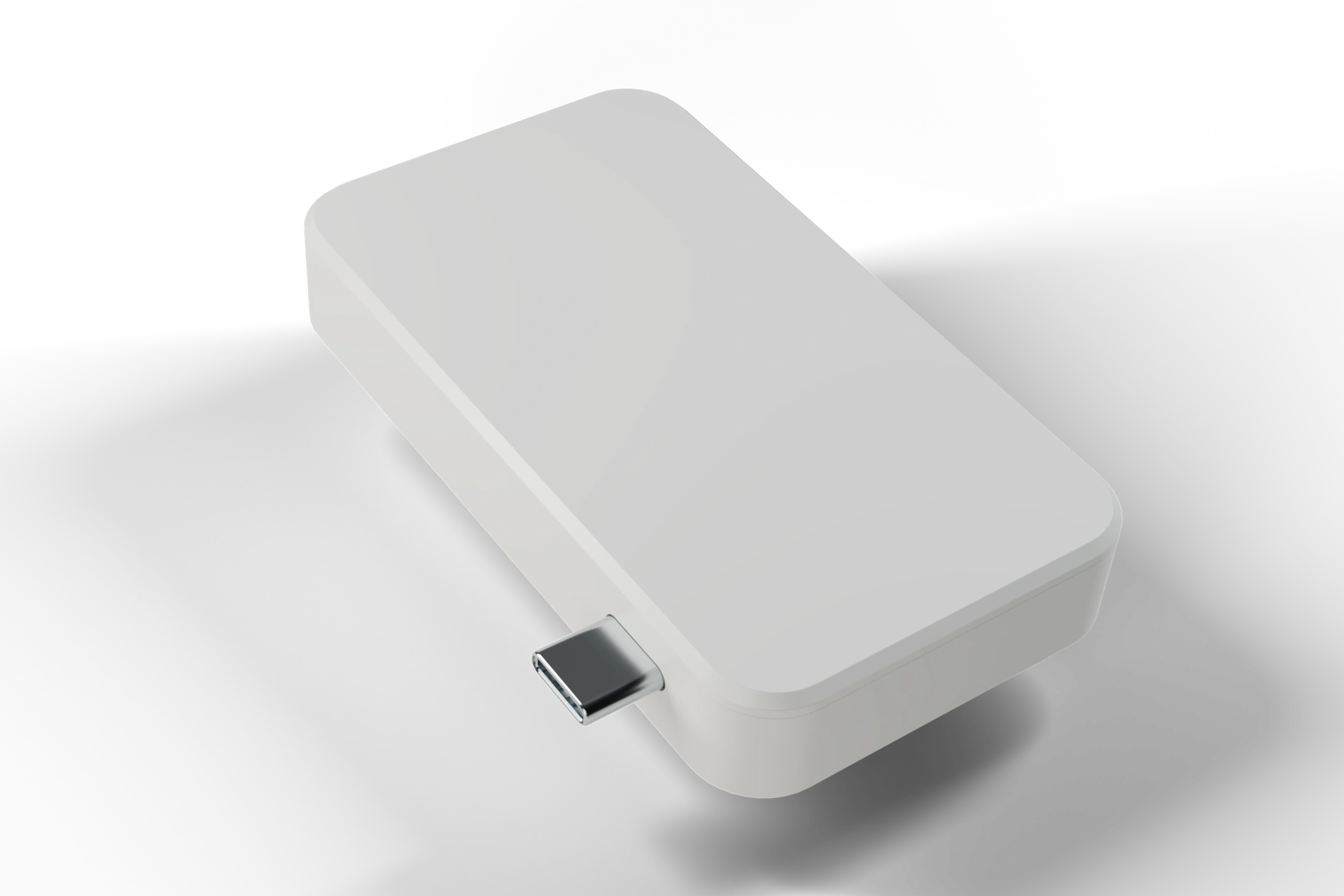
Explore the hardware from every angle.
DESIGN VISUALIZATION
Done with phone hotspots?
Your MacBook
online.
Your phone free.
Send the proposal. Join the meeting. Leave your phone out of getting your laptop online.
Relay is a USB-C cellular card being built for MacBook. Plug it in for a connection of your own, powered by your Mac.
- No phone hotspot to keep running.
- No guest Wi-Fi password to ask for.
- No separate battery to charge.
In development. Supported cellular coverage and service required.
01 / YOUR WORKBeyond the deskA connection for the places your day takes you.
02 / YOUR TIMESkip the Wi-Fi huntBring cellular access to your MacBook.
03 / YOUR PHONEKeep it freeNo phone hotspot to set up or keep running.
04 / YOUR BAGOne less chargerR1 draws power directly from your MacBook.
Your work is ready. Your hotspot isn’t.
Open the laptop.
Reach for
the phone. Again.
The proposal is finished. The client is waiting. Now you’re setting up a hotspot before you can send it. Relay is being built to take your phone out of that routine, wherever supported cellular service is available.
Give your phone
one less job.
Your phone’s hotspot can get you online today. Relay is being built for the days you want your MacBook to have a connection of its own.
| In your day | Phone hotspot | With Relay R1 |
|---|---|---|
| Your phone | Provides the laptop’s internet connection. | Stays free from hotspot duty. |
| Getting online | Use your phone’s tethering controls and connect your Mac. | Connect R1 through USB-C. Final service setup is still being finalized. |
| Power to remember | Your phone powers the hotspot. | Your Mac powers R1. No separate R1 battery to charge. |
| Where you can work | Depends on your phone’s coverage and tethering service. | Requires supported cellular coverage and service through our data partner. |
| When you can use it | Available on supported phones and plans. | In development. Free waitlist open; price and shipping date to come. |
R1’s setup, compatibility and performance are still being validated. Cellular connections can be interrupted.
See what we’re testing before launch
Less setup.
More getting it done.
Plug R1 into your MacBook for a connection that doesn’t depend on your phone. Designed for USB-C MacBooks from 2018 onward with macOS 12 or newer. Compatibility testing is ongoing.

Your MacBook online.
Your phone free.
Join the free waitlist for R1 development and availability updates.