Technology — numbers & targets

Every number we have.

Target specifications for the Relay R1. Some numbers come from the Qualcomm SDX35 reference; others are our own design targets. What's measured is measured, what's a target says target — and every figure firms up as we move through certification.

§ 01 — Full spec sheet

The whole spec sheet.

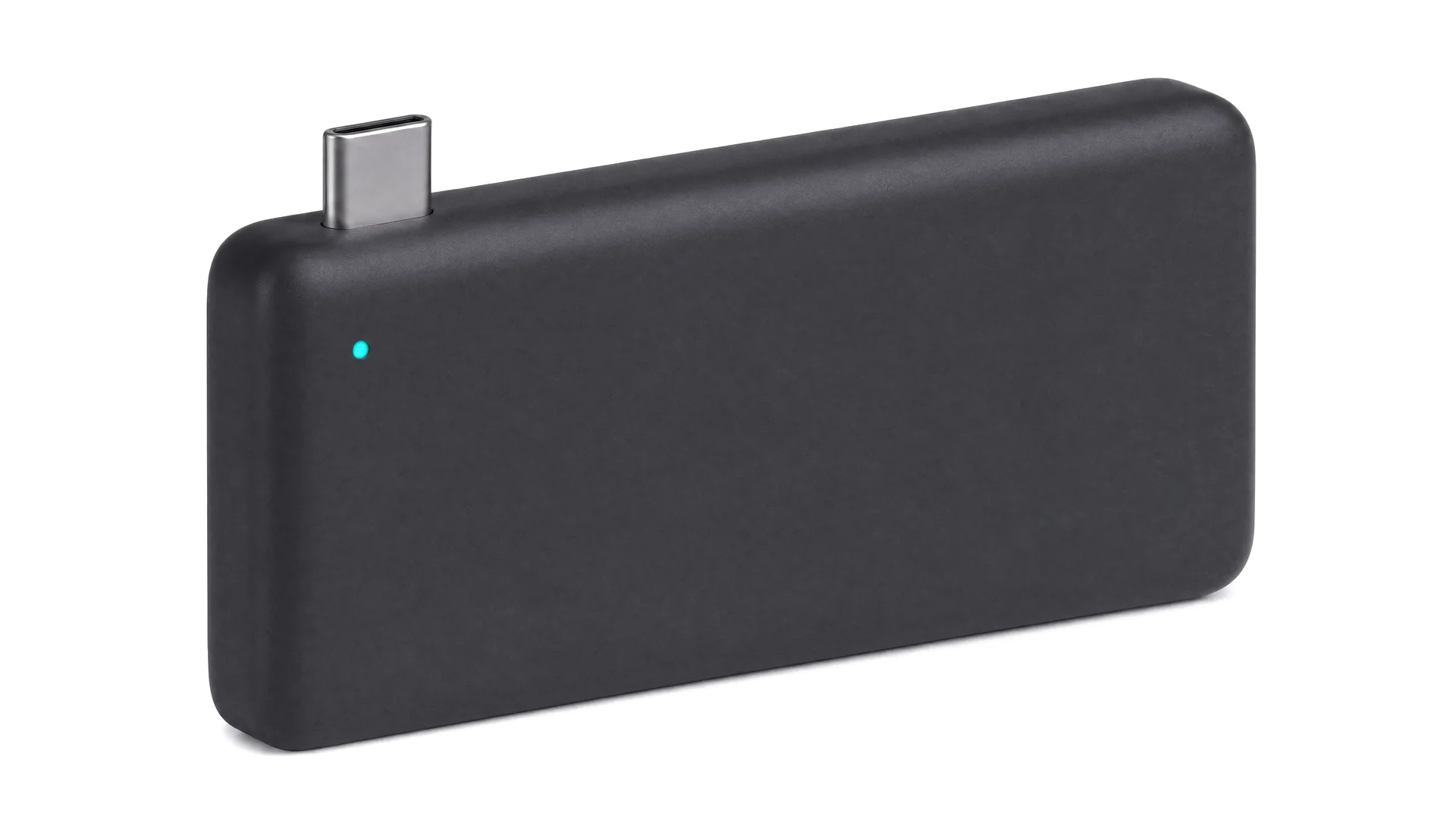
R1 · Space Black design render 70 × 35 × 7 mm · 22 g Relay R1 in Space Black — design render
modemQuectel RG255C-GL · Qualcomm SDX35
standard5G NR RedCap · 3GPP Release 17 · sub-6 GHz
peak downlinkup to 223 Mbps (theoretical)
peak uplinkup to 123 Mbps (theoretical)
fallbackLTE Cat 4 — 150 / 50 Mbps (theoretical)
US carriersAT&T + T-Mobile (nationwide 5G SA) · Verizon not supported at launch
data interfaceUSB 2.0 over USB-C (480 Mbps ceiling — never the bottleneck)
powerUSB-C bus-powered · ≤ 4.5 W peak · no battery
dimensions70 × 35 × 7 mm
weight~ 22 g
shellPC/ABS, UL94 V-0 · matte soft-touch · IPX4 is a design target, not a rating
SIMnano-SIM tray · carrier-unlocked
macOSCatalina 10.15 + · native CDC-ECM · zero drivers
other OSesstandard USB networking · validation during certification
colorsSilver · Space Black
price$199 USD

theoretical = the RedCap spec-sheet ceiling, not a promise. real-world throughput depends on signal and network load — we publish measured numbers when we have them, not before.

§ 02 — Radio bands

Sub-6 GHz, everywhere it counts.

5G NR · sub-6

n1 n2 n3 n5 n7 n8 n12 n13 n14 n18 n20 n25 n26 n28 n30 n38 n40 n41 n48 n66 n70 n71 n77 n78 n79

Nationwide US coverage on AT&T (n5/n77) and T-Mobile (n41/n71) 5G SA — the two US carriers with nationwide 5G Standalone — plus EU/Asia bands. Verizon is not supported at launch.

LTE Cat 4 fallback

LTE band chart — verified against shipping hardware, published before launch

Where 5G SA isn't available yet, Relay falls back to LTE Cat 4 — up to 150 Mbps down / 50 Mbps up (theoretical), single carrier. Still more than a video call, a screen share, and a git push need at the same time.

Not supported

mmWave — n257 n258 n260 n261

A deliberate trade. mmWave needs four extra antennas and a different RF front-end — and RedCap doesn't speak it. On the long-term roadmap, not in R1.

the NR list is the module's datasheet band set. the full carrier-validated band chart — 5G and LTE — is re-verified on shipping hardware and published before launch.

§ 03 — Software

It looks like ethernet. Because it is.

Relay enumerates as a CDC-ECM network adapter — a standard macOS has shipped natively since Catalina, 2019. No driver, no carrier app on the critical path. It works the same way Apple's own USB-C-to-Ethernet adapter works.

And it runs USB 2.0 data over the USB-C connector — deliberately. USB 2.0's 480 Mbps ceiling is more than double RedCap's theoretical peak, so the bus never bottlenecks the radio. USB 2.0 signaling also means lower power draw and zero interference headaches next to the antennas.

CDC-ECM native zero drivers on macOS
$ # plug relay in. then:
$ ifconfig en7
en7: flags=8863<UP,BROADCAST,SMART,RUNNING,SIMPLEX,MULTICAST>
     status: active
$ # that's it. there is no step 3.

illustrative — interface names vary by Mac. the point stands: no relay software appears anywhere in this picture.

§ 04 — OS support

Mac first. Everything else, validated.

macOS · primary

Catalina 10.15 +, native.

CDC-ECM has shipped in macOS since 2019 — zero drivers, day one. An optional menu-bar companion app is on the roadmap for signal and data stats; it will never be required.

Linux · expected

Standard USB networking.

Kernel CDC-ECM plus NetworkManager/ModemManager — Relay shows up like any ethernet interface, Pi to workstation. Validated during certification.

Windows · planned

Validation before claims.

Windows support is planned via standard USB networking — and we won't claim it until it passes validation during certification. No driver-download treasure hunts; that's the bar.

iPadOS · expected

The wired-ethernet path.

iPadOS treats USB-C ethernet adapters as real wired connections. Expected to work the same way; validated before ship.

ChromeOS · expected

Same standard, same story.

ChromeOS speaks standard USB networking too. Expected to work on USB-C Chromebooks; validated before ship.

Android · roadmap

After the Mac ships.

Modern Android hardware with USB-host support should work — but per-OEM behavior varies, so we won't claim it until we've validated it. Mac hardware ships first; Android follows.

"expected" means CDC-ECM is a standard these systems already speak — not that we've tested your device yet. the tested matrix is published before the product ships.

§ 05 — Antenna design

A dual PIFA array. In 7 mm.

The hardest engineering on Relay isn't the modem — it's making two planar inverted-F antennas coexist inside a 7 mm enclosure without killing each other's isolation.

Everything below is a design target from simulation, not a chamber measurement. We'll publish the measured numbers — good or bad — once validation is done.

Isolation

Design target

across band pairs — chamber measurements published after validation.

Efficiency

Design target

tuned per band — low bands are the hard part. numbers to follow.

radiation pattern · illustrative measured plots published after chamber testing
§ 06 — Certification

Module: certified. Host: in progress. Nothing ships before the grant.

The Quectel RG255C-GL module inside Relay carries its own FCC certification. Relay's host-device authorizations are what we're working through now — and no unit ships until Relay's own grant is issued.

USA · FCC

Authorization in progress.

The module is FCC-certified; host-device certification for Relay itself is underway. We will not ship any unit until Relay's own FCC authorization is granted.

EU · CE / RED

RED 2014/53/EU + EMC + LVD

Notified-body testing targeted for 2027, ahead of shipping. EN 301 908, EN 301 489, EN 62311 (SAR) compliance.

Canada · ISED

RSS-130 / RSS-247

Filing in parallel with the FCC. Same modular path, same rule: no grant, no shipment.

Carrier · PTCRB

AT&T + T-Mobile

PTCRB testing targeted for 2027, ahead of shipping. Each US carrier requires separate device approval for full 5G NR access. Verizon is not on the launch roadmap.

every certification date on this page is a target, gated on testing. the ship window — Q2–Q3 2027 — already accounts for that.

§ 07 — Firmware

Signed updates. For the life of the device.

Every Relay shipped gets free signed firmware updates for as long as we make them — five years guaranteed. Bug fixes, modem revisions, new bands as carriers light them up. Delivered through the optional menu-bar app or a one-line CLI.

5-yr update guarantee Ed25519 signed
$ relayctl update
checking relay5g.com/fw … up to date
fw 1.0.0 · signature ok (Ed25519)
nothing to do.

illustrative — the CLI ships with the device, not before it.

Have a technical question?

Just email us.

We answer our own mail. No support funnel, no ticket queue — a human replies, usually Kavin.

Reservation only · No charge until shipping · FCC authorization in progress · Ships Q2–Q3 2027