For journalists, and the merely curious.
The fact sheet, downloadable renders, a founder bio, and boilerplate you can paste. Questions or interviews: kavin@relay5g.com — a human replies, usually the founder.
In one sentence.
Relay is a $199 USB-C card that gives any MacBook 5G — no drivers, no app, no hotspot.
that's the whole pitch. if you only quote one thing, quote that.
The numbers, labeled honestly.
What's measured is measured. What's a target says target. Speeds are quoted only as theoretical peaks — we publish field numbers when we have them, not before.
| Company | Sovereign ATX LLC (Wyoming) |
| Founder | Kavin Lingham — 16, Austin, Texas |
| Product | Relay R1 · USB-C 5G card for MacBook |
| Price | $199 USD · single SKU |
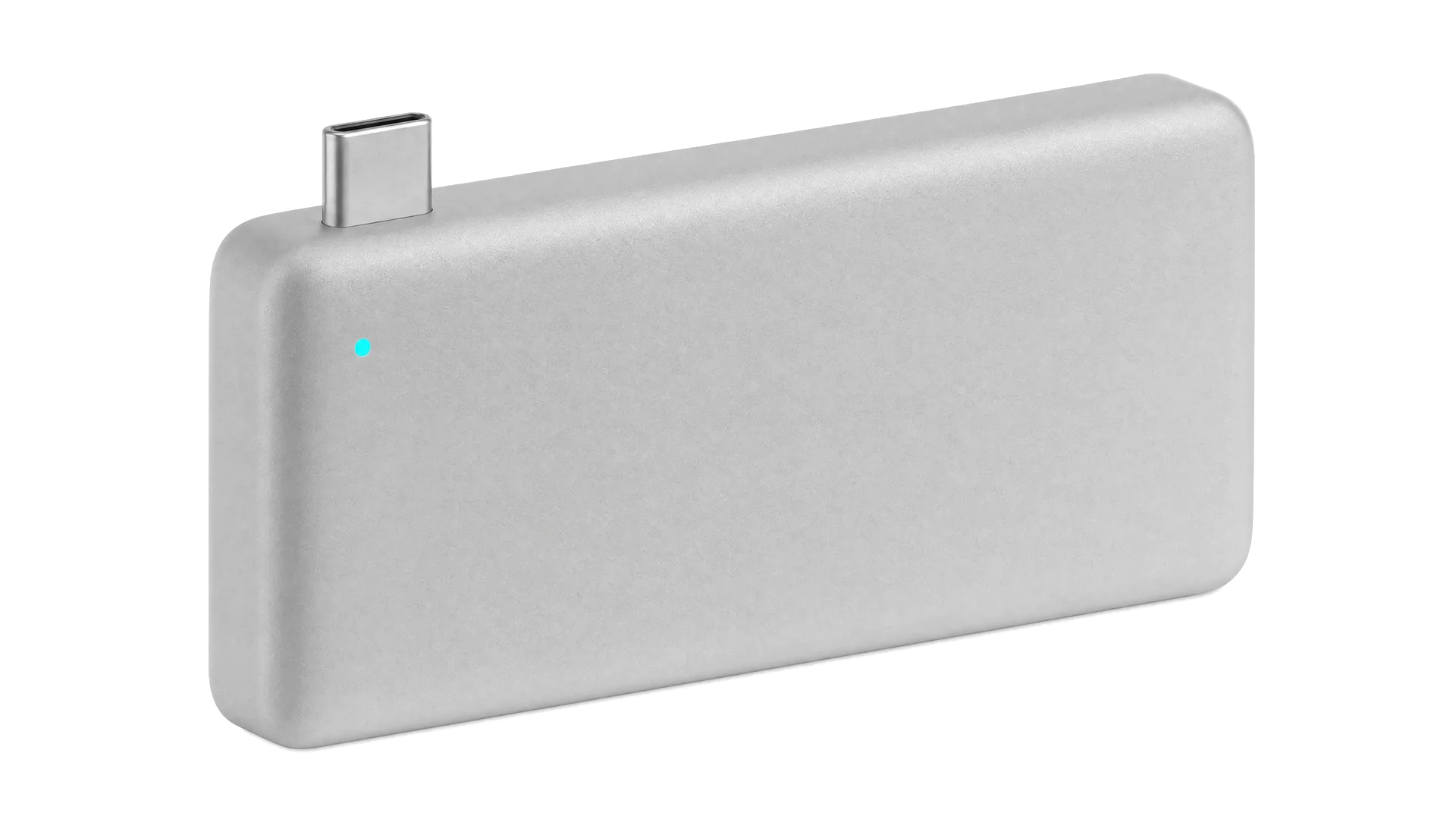
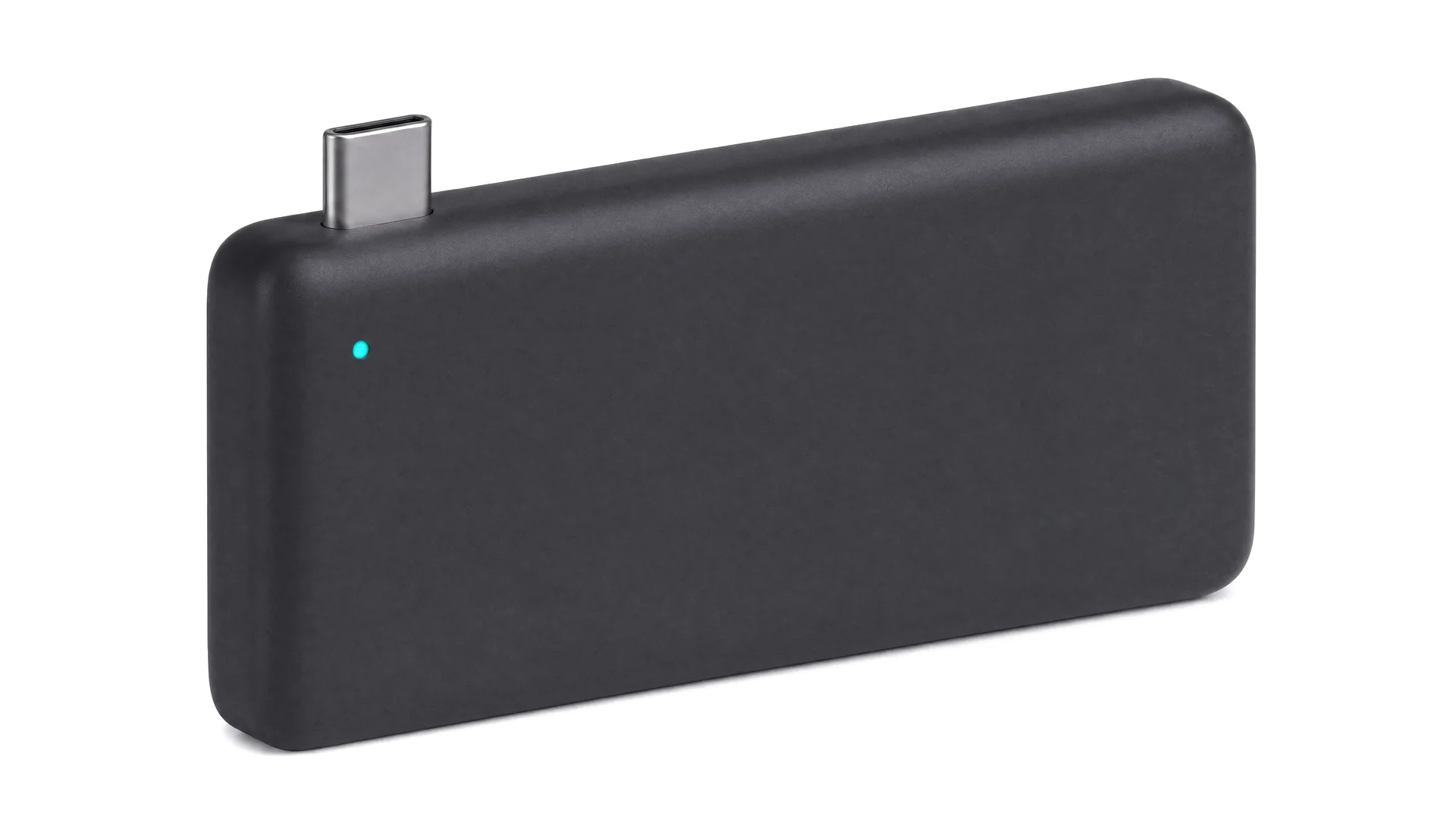
| Finishes | Silver · Space Black |
| Ships | Q2–Q3 2027 (gated on certification) |
| Size | 70 × 35 × 7 mm · 22 g |
| Modem | Quectel RG255C-GL (Qualcomm SDX35) |
| Radio | 5G RedCap · Release 17 · sub-6 GHz (no mmWave) |
| Peak speeds | Up to 223 Mbps down / 123 Mbps up (theoretical — spec ceiling, not field data) |
| Fallback | LTE Cat 4 |
| Interface | USB-C connector · USB 2.0 data (480 Mbps ceiling — no bottleneck for RedCap) |
| Power | Bus-powered · ≤ 4.5 W peak · no battery |
| US carriers | AT&T and T-Mobile — the two US carriers with nationwide 5G Standalone (Verizon not supported at launch) |
| SIM | nano-SIM (physical SIM only — no consumer eSIM) |
| OS | macOS Catalina 10.15+ native, via CDC-ECM (other OSes via standard USB networking — validated during certification; Android on the roadmap, post-launch) |
| In the box | Relay R1 · 15 cm braided USB-C extender · nano-SIM tray pin · quickstart card · Dyneema sleeve |
| FCC status | Authorization in progress (module is FCC-certified; nothing ships before Relay's own grant — no FCC ID exists yet) |
| Availability | Reservation only — free, no card (no payment before shipping) |
| Contact | kavin@relay5g.com |
design render
Renders, ready to publish.
Every image below is a design render of production-intent industrial design — not a photograph. Please caption them as renders; we do.
R1 · Silver — cutout
Transparent background. Drops onto any layout.
PNG · 1417 × 927 · transparentR1 · Space Black — cutout
Transparent background. Drops onto any layout.
PNG · 1920 × 1080 · white backgroundR1 · Silver — hero
16:9, white background. Ready for article headers.
PNG · 1920 × 1080 · white backgroundR1 · Space Black — hero
16:9, white background. Ready for article headers.
Real photography
Product photos on real MacBooks — published once real hardware is in its final enclosure. Until then, renders only, labeled as such.
Logo lockup & wordmark
SVG + PNG, light and dark variants. Need one sooner? Email us and we'll send what we have.
usage: free for editorial coverage of relay. no endorsement implied. please don't present renders as photographs.
Kavin Lingham. Sixteen. Austin, Texas.
Kavin Lingham is the 16-year-old founder of Relay, an independent hardware company in Austin, Texas, building a USB-C 5G card for MacBook. The operating entity is Sovereign ATX LLC.
He builds in public. The first V1 boards were assembled in mid-2026, and when both powered up but refused to enumerate on USB, Lingham traced the fault to a single schematic pin — the modem's USB_VBUS sense line, marked no-connect — and published the diagnosis. The fix ships in the next board revision.
Relay's public numbers follow one rule: measured things are measured, targets say "target," and speeds are quoted only as theoretical peaks. FCC authorization is in progress, and no unit ships before Relay's own grant.
interviews & fact-checking: kavin@relay5g.com · founder photo available on request
"My MacBook is the only device I own that can't get online by itself. That seemed fixable."
— Kavin Lingham, founder, Relay
Copy. Paste. Done.
Relay is a $199 USB-C card that gives any MacBook 5G. It enumerates as a standard USB ethernet adapter (CDC-ECM), which macOS has supported natively since Catalina in 2019 — so there is no driver to install, no app to download, and no phone hotspot to babysit. Plug it in and the Mac treats it like a wired connection.
Relay is built around the FCC-certified Quectel RG255C-GL module (Qualcomm SDX35) using 5G RedCap (Release 17) — up to a theoretical 223 Mbps down / 123 Mbps up, with LTE Cat 4 fallback. It is bus-powered (≤ 4.5 W), has no battery, weighs 22 grams, and measures 70 × 35 × 7 mm. At US launch it supports AT&T and T-Mobile, the two carriers with nationwide 5G Standalone; Verizon is not supported at launch.
Relay is made by Sovereign ATX LLC, an independent hardware company founded by 16-year-old Kavin Lingham in Austin, Texas, and built in public. FCC authorization is in progress; no unit ships before it is granted. The first batch ships Q2–Q3 2027. Reservations are free at relay5g.com.
Style notes. Call it a "USB-C 5G card for MacBook" — it isn't a hotspot (no battery, no Wi-Fi network of its own). Relay is reservation-only: no payment is collected, and nothing ships before FCC authorization. The price is $199; there is no other SKU. Quote speeds only as "up to 223 Mbps / 123 Mbps (theoretical)" — there is no field data to cite yet. All current product images are design renders, not photographs. Relay is not affiliated with Apple; Mac and MacBook are trademarks of Apple Inc.