MacBook users who need cellular connectivity away from WiFi have more options in 2026 than ever before — but the landscape is scattered and confusing. USB-C dongles, MiFi pucks, carrier-locked devices, and unlocked hardware all compete for the same use case, with very different trade-offs.
This guide covers every meaningful option currently available for MacBook 5G in 2026. We've reviewed the specs, compatibility, pricing, and real-world usability for each product so you can make an informed decision.
Disclosure: Relay is our product. We've reviewed it last and marked it clearly. Every competitor review is written based on publicly available specs and independent testing. We're not trying to trash anyone — just give you an honest picture.
TCL Linkport IK511
The TCL Linkport is the most established USB-C 5G dongle on the market for macOS. It's been available since 2024 and has a proven track record with MacBook users. It plugs into USB-C, requires no driver installation on macOS (recognized as a CDC-NCM network interface), and supports Sub-6GHz 5G on T-Mobile's network.
The lock-in is the main caveat: the IK511 is carrier-locked to T-Mobile. You can't swap to Verizon or AT&T. If you're a T-Mobile subscriber who spends an extra $5–10/month on a data add-on, this is a straightforward value. If you're on another carrier, it won't work without a workaround.
Coverage is limited to the US. The form factor is compact but protrudes about 15mm from the MacBook — it's flush-ish, but not truly flush.
- Proven, widely reviewed
- No drivers needed on macOS
- $96 — lowest upfront cost
- Compact form factor
- T-Mobile only (US)
- Requires monthly add-on plan
- Sub-6GHz only, no mmWave
- Not truly flush to chassis
Tri Cascade VOS
The Tri Cascade VOS is a USB-C 5G dongle aimed at enterprise users and frequent international travelers. It supports eSIM with multi-carrier compatibility and claims macOS plug-and-play via USB-C — though some users have reported needing to install a utility app for full carrier switching functionality. The core internet connectivity works without it.
It's unlocked and works on most major carriers globally, which is a meaningful advantage over the TCL. At $210, it's more expensive than the Linkport but you get carrier flexibility in return. Speeds cap at around 300 Mbps on Sub-6GHz in real-world testing — solid for most use cases.
The design is functional but industrial. It's clearly a business device, not one designed with MacBook aesthetics in mind.
- Unlocked — most carriers globally
- eSIM support
- No monthly plan required (BYOD data)
- Strong enterprise support
- Utility app recommended for full features
- Bulkier than other options
- $210 — mid-range pricing
- No data included
Horizon DG505G
The Horizon DG505G is the premium end of the USB-C cellular dongle market. At $399, it targets professionals who need both Sub-6GHz and mmWave 5G — useful in dense urban environments where mmWave deployments are active. The device supports multiple antenna configurations and is marketed toward field technicians and enterprise deployments.
macOS compatibility is documented but requires driver installation — Horizon provides a macOS package that works on Ventura and Sonoma, though Sequoia compatibility has been inconsistent according to user reports as of early 2026.
For most MacBook users, the $399 price tag is hard to justify unless you specifically need mmWave — which is only available in a handful of US cities in limited coverage zones. The added cost buys you capabilities most people will never use.
- Sub-6GHz + mmWave 5G
- Highest peak speeds (theoretical)
- Robust build quality
- Multi-carrier unlocked
- $399 — highest cost by far
- Requires driver install on macOS
- macOS Sequoia compatibility issues reported
- mmWave rarely available
Netgear M6 Mobile Hotspot
The Netgear M6 is a dedicated MiFi puck — a separate battery-powered WiFi hotspot device. It's not a dongle you plug into your MacBook; it's a standalone device you carry separately and connect to over WiFi. This distinction matters for the use case.
The M6 is excellent hardware: supports 5G, has a battery that lasts 12+ hours, and can connect up to 32 devices simultaneously. It's genuinely useful if you need to share connectivity with multiple devices or share with colleagues. The macOS compatibility is trivially good — it just looks like a WiFi network.
The downsides are the form factor (another device to charge, carry, and manage) and the monthly plan requirement ($30–80/month depending on carrier). For a single MacBook user, it's often overkill.
- No driver required (WiFi)
- 12+ hour battery life
- Connect up to 32 devices
- Works with any laptop, tablet, phone
- Separate device to carry and charge
- Monthly plan required
- Higher latency than direct USB
- Slower WiFi overhead vs direct connection
Relay — Our Pick
Full disclosure: Relay is our product. We've reviewed competitors as fairly as possible above. We include ourselves here for completeness, and because we believe the comparison is honest.
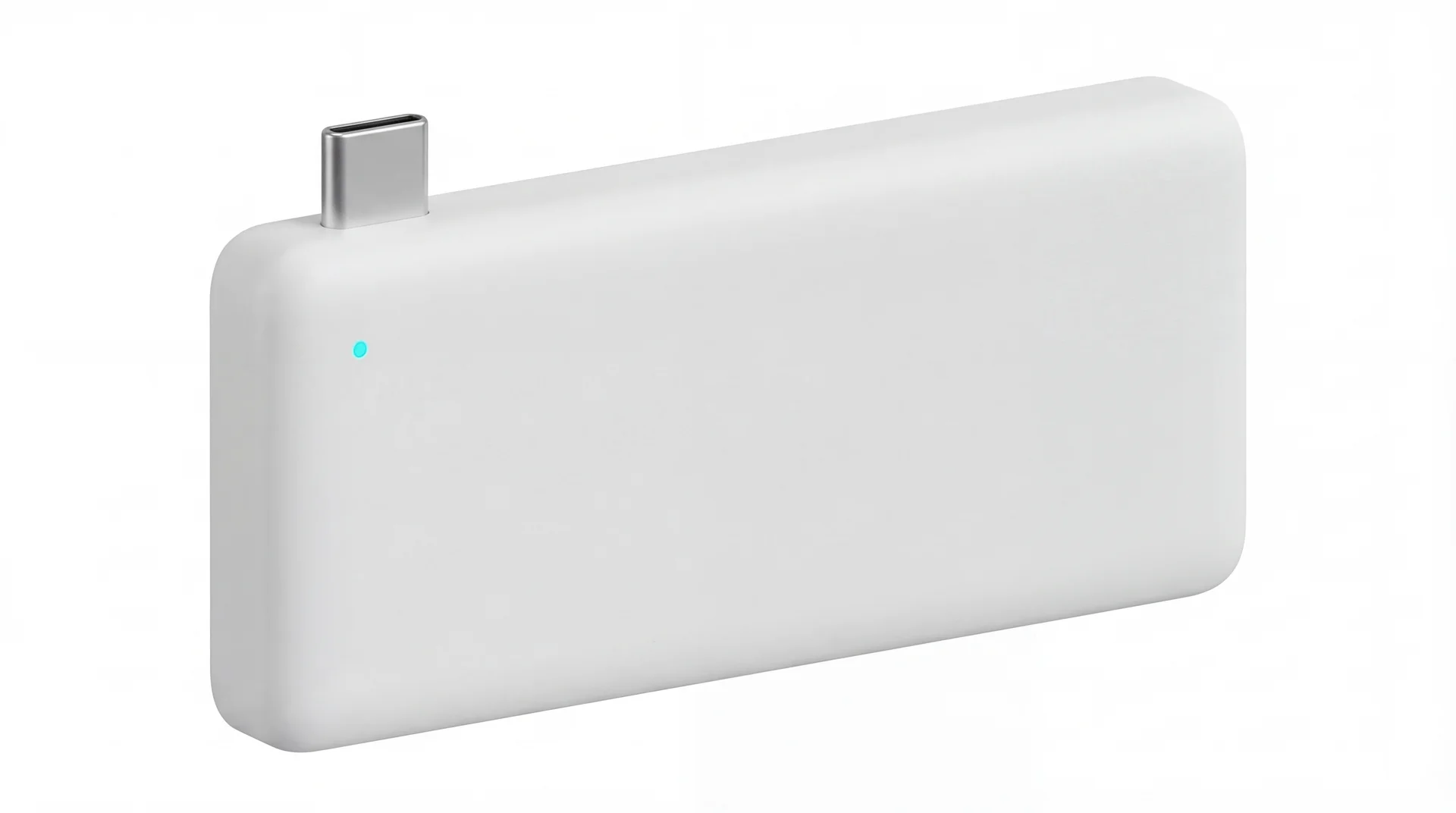
Relay is a flush USB-C 5G module designed specifically for MacBook. Unlike other dongles, Relay was purpose-built for the MacBook form factor — it's designed to sit nearly flush with the MacBook chassis, matching Apple's design language rather than looking like an afterthought.
Two models: Relay Air ($125, for MacBook Air and Neo) and Relay Pro ($175, for MacBook Pro). Both include data pre-loaded on the eSIM — 5GB for Air, 15GB for Pro — so you're connected the moment you plug in, with no carrier setup required. macOS recognizes it as a cellular network interface with zero driver installation.
Relay is unlocked and works across major US carriers via eSIM switching. The toggle button on the side lets you pause connectivity instantly without unplugging. The Pro model adds a nano-SIM tray for users who prefer physical SIM management.
The honest caveat: Relay is in pre-order as of March 2026. Shipping is targeted for Q3 2026. If you need something today, the TCL Linkport or Tri Cascade VOS are available now. If you can wait a few months and want something purpose-built for MacBook, Relay is worth the waitlist.
- Designed for MacBook — flush fit
- Data included, no setup required
- Zero drivers on macOS
- Unlocked (eSIM + carrier switching)
- Toggle button on device
- Available in MacBook color options
- Not available until Q3 2026
- Data is add-on after included GB
- Only for MacBook (not Windows)
Full Comparison Table
| Product | Price | 5G Type | macOS Driver? | Carrier | Data Incl? | eSIM | Flush Fit | Available |
|---|---|---|---|---|---|---|---|---|
| TCL Linkport IK511 | $96 | Sub-6 | No driver | T-Mobile only | No | Yes | Partial | Now |
| Tri Cascade VOS | $210 | Sub-6 | App recommended | Unlocked | No | Yes | No | Now |
| Horizon DG505G | $399 | Sub-6 + mmWave | Driver required | Unlocked | No | Yes | No | Now |
| Netgear M6 (MiFi) | $280 | Sub-6 | N/A (WiFi) | Carrier plan req. | No | Varies | N/A | Now |
| Relay Air | $125 | Sub-6 (220 Mbps) | No driver | Unlocked | 5GB | Yes | True flush | Q3 2026 |
| Relay Pro | $175 | eMBB (5.4 Gbps) | No driver | Unlocked | 15GB | Yes | True flush | Q3 2026 |
Verdict: Which Should You Buy?
If you need something today and are on T-Mobile: TCL Linkport IK511 at $96 is the easy choice. It's proven, driver-free, and the cheapest option. You'll need to add a data plan to your T-Mobile account, but the hardware investment is low.
If you need something today and want carrier flexibility: Tri Cascade VOS at $210 is worth the premium over TCL. The eSIM unlocks any carrier, and it works internationally.
If you need mmWave speeds and money isn't a concern: Horizon DG505G at $399 covers the edge case. Just verify your area has mmWave coverage first — it's rarer than carriers suggest.
If you need to share connectivity across multiple devices: Netgear M6 is the right tool. It's a different product category — a portable router, not a dongle — but excellent at what it does.
If you can wait until Q3 2026 and want something purpose-built for MacBook: Relay is our pick. The flush design, included data, zero-driver macOS integration, and unlocked eSIM address every major friction point with the current crop of dongles. The waitlist is open and early access pricing is $125/$175.
For a deeper comparison of Relay specifically against hotspot and competitors, see our full comparison page.
Ready to get 5G on your MacBook?
Join the waitlist for Relay — purpose-built for MacBook, data included, no setup required.
See Relay pricing →