No. The MacBook Neo does not have 5G. Despite using an iPhone-derived chip, MacBook Neo is WiFi-only. There is no built-in cellular modem, no eSIM, and no carrier connectivity.
When Apple revealed the MacBook Neo — a MacBook built around chip architecture derived from the iPhone's silicon — the question on everyone's mind was obvious: if it's running iPhone-class silicon, does it finally have MacBook Neo cellular?
The answer is no. And the reasoning is more nuanced than "Apple is stingy."
The logic that led people to expect 5G
The assumption wasn't unreasonable. Apple's iPhone chips — the A-series and now the architecture behind the MacBook Neo — have always shipped with integrated modem support. The iPhone 16 and 16e include Apple's C1 modem. Earlier models used Qualcomm modems tightly integrated with the A-series silicon. The idea that Apple would port this architecture to a laptop and leave the modem out felt like a deliberate choice that would eventually change.
"If it runs an iPhone chip, it should do iPhone things." — The logic most people assumed was correct. It wasn't.
The iPhone's modem is physically integrated — die-level, in the case of Apple's C1 — but that doesn't mean it's automatically portable. The modem on a phone is one component in a system that also includes antenna structures designed into the phone body, carrier certification for that specific hardware configuration, and software stacks tuned for cellular connectivity management. None of that carries over automatically when you put the same chip architecture in a laptop.
Why Apple left cellular out of MacBook Neo
There are several real reasons, and Apple has never officially stated all of them. But the picture is fairly clear from the outside:
-
1
Carrier certification is a massive undertaking
Every cellular device sold commercially must be certified by regulatory bodies and approved by individual carriers — in every country it's sold. Apple sells MacBooks in over 60 countries and through dozens of carrier channels. Getting a laptop certified for cellular connectivity in that footprint is a multi-year engineering and legal project, separate from the chip work entirely.
-
2
The MacBook antenna system wasn't designed for cellular
Cellular radios need antennas. In an iPhone, the antenna structures are built into the metal frame and carefully positioned to optimize signal. In a MacBook — especially one with an aluminum chassis — designing effective cellular antennas without compromising performance or aesthetics is a significant engineering challenge that wasn't baked into the MacBook Neo's design.
-
3
Apple's modem team is still maturing
Apple's C1 modem is their first fully in-house cellular chip. It launched in iPhone 16e, and by all reports it's solid — but it's generation one. Adapting it for a laptop form factor, power envelope, and antenna architecture while also managing the certification load is more than a single product cycle of work.
-
4
Ecosystem incentives favor your iPhone
When your MacBook can't connect on its own, it connects through your iPhone — Instant Hotspot, Handoff, Sidecar all depend on devices being tightly coupled. If your MacBook had its own cellular connection, a piece of that dependency evaporates. Apple has historically kept the Mac tethered to iPhone for connectivity, and there's reason to believe that's intentional.
What this means for MacBook Neo users day-to-day
If you bought a MacBook Neo expecting it to work anywhere like an iPad Pro or iPhone, you'll find the gap quickly. At a café with no WiFi, in a hotel with pay-per-day WiFi, at a client site with no guest network — the MacBook Neo has no native path to connectivity. You're back to the same workarounds every MacBook user has always had: phone hotspot, MiFi puck, or hoping the venue has WiFi.
Phone hotspot works — but there are real costs. Enabling hotspot drains iPhone battery by around 73% in two hours of active use, heats the phone to 42°C, and requires manual toggling. Every time your MacBook sleeps and wakes, you may need to re-enable the hotspot on your phone. It's functional, not elegant. See our full breakdown: Phone Hotspot vs Relay.
When will MacBook actually have built-in 5G?
Based on Apple's current trajectory — C1 modem generation one shipping in iPhone 16e, MacBook Neo still WiFi-only — the most realistic estimate for built-in MacBook cellular is somewhere between 2028 and 2030. That's not a rumor; it's a reasonable projection based on where Apple's modem development is, how long carrier certification takes, and the design work required to retrofit cellular into a MacBook chassis properly.
There's an outside chance Apple accelerates this on the strength of the C1's reception and demand signals, but a 2027 MacBook with cellular would be surprisingly fast. More likely, MacBook Neo owners who bought in 2026 are looking at a multi-year wait for native cellular on Apple hardware.
What MacBook Neo users can do right now
If you have a MacBook Neo and need connectivity away from WiFi today, your practical options are:
- iPhone hotspot — Free, works, but drains battery and requires setup each time. Fine for occasional use.
- TCL Linkport IK511 — $96, available now, works on T-Mobile. No drivers on macOS. Add a data plan to your T-Mobile account.
- Tri Cascade VOS — $210, unlocked, works internationally. Better for travelers or non-T-Mobile users.
- Relay Air — Purpose-built for MacBook, including Neo. Flush USB-C form factor, included data, zero drivers. Available Q3 2026. Join the waitlist.
For a full comparison of every 5G option for MacBook, including MacBook Neo, see the compare page.
The USB-C 5G module designed for Neo
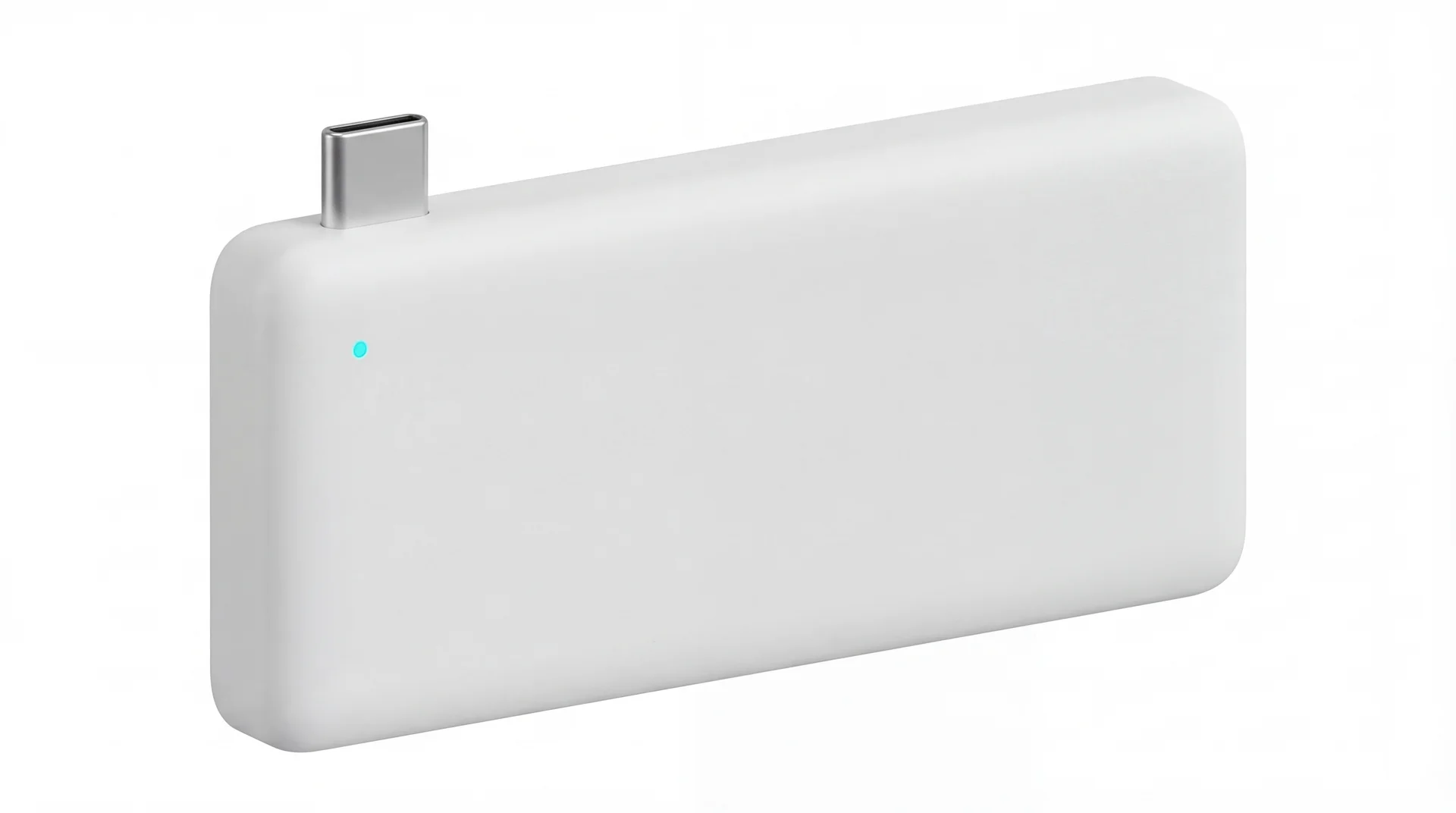
Relay Air was specifically designed for MacBook Air and MacBook Neo. It plugs into the USB-C port, sits nearly flush with the chassis, and gives your MacBook Neo native 5G connectivity in 3 seconds. No drivers, no carrier setup — the eSIM ships with 5GB of data already loaded.
Color-matched to MacBook Neo finishes. Pre-order pricing is $125 with 10% off at launch for waitlist members.
The bottom line
MacBook Neo does not have 5G. The iPhone chip inside it is capable of cellular connectivity in an iPhone — but the antenna system, carrier certifications, and software stack that make it work aren't present in the MacBook Neo's hardware. Apple made a deliberate choice to ship WiFi-only, and that choice is unlikely to change for at least two to three more product generations.
For MacBook Neo users who need connectivity today, external solutions are the practical answer. The options have improved meaningfully in 2026, and Relay was specifically designed to fill this gap — a purpose-built 5G module for MacBook that works without drivers, without hotspot, and without your phone.
5G for your MacBook Neo — no waiting for Apple.
Relay Air is designed for MacBook Neo. Join the waitlist and get 10% off at launch.
Join the waitlist