In 2026, you can buy a 5G laptop from Lenovo, HP, Dell, and Samsung. You can buy a 5G phone, a 5G tablet, even a 5G watch. What you still can't buy is a MacBook with cellular connectivity — not a single one, not at any price.
Apple's entire MacBook lineup, including the brand-new MacBook Air M5, MacBook Pro M5, and the cellular-adjacent MacBook Neo, ships without any built-in 5G. WiFi only. Every year, every model. The most premium consumer laptop brand on earth.
"Apple sells WiFi. Every other laptop maker sells WiFi and cellular."
Every other premium laptop has it
This isn't a niche feature. For the past three years, virtually every major Windows laptop manufacturer has offered at least one 5G-capable SKU in their premium lineup. Some ship it standard. Here's where things stand in 2026:
The business case for 5G laptops is clearly established. Qualcomm's X70 modem has been shipping in Windows laptops since 2023. The engineering is solved. The carriers are ready. The pricing is reasonable. And yet Apple — a company that ships 5G in every iPhone, every iPad Pro, every Apple Watch — looks at its laptop lineup and says: no.
What about MacBook Neo?
When Apple announced the MacBook Neo — built around an iPhone-derived chip architecture — a lot of people assumed cellular was finally coming. Makes sense on paper: if it runs iPhone silicon, it should be able to do iPhone things, including calling home over 5G.
It can't. MacBook Neo is WiFi-only. Apple's official reasoning has never been fully stated, but the practical barriers are well understood: carrier certification is a multi-year, multi-country process. Every laptop model with cellular needs to be approved, band by band, carrier by carrier, region by region. Apple's notebook lineup has dozens of regional variants and sells hundreds of SKUs globally. The certification overhead is enormous — probably why they've concluded the iPhone handles it better than the Mac ever could.
The result: MacBook Neo has an iPhone chip, can't make an iPhone call, and can't get on 5G without WiFi or a hotspot.
How MacBook users cope today
There's no good native solution — so people improvise. Here's what the current workarounds actually look like in practice:
-
iPhone hotspot. The most common fix. Works reasonably well at home, but battery drain is real, you're burning through your phone's data, and the moment your phone is on a call or drops signal, your laptop drops too. And if your phone is in your bag and the hotspot times out — you just lost your connection mid-call.
-
MiFi / pocket router. A dedicated 4G or 5G hotspot device. Another thing to charge, another thing to carry, another plan to manage. Costs $80–$200 for the device plus $30–$80/mo for data. And it still won't show up in your Mac's Network menu — it's just another WiFi network your laptop connects to.
-
USB cellular dongle. Closer to what we actually want, but current USB-C 4G dongles require driver installation, often fail on macOS after updates, and none of them support 5G. The ones that work are mostly designed for Windows.
-
WiFi everywhere + coffee shops. Hoping the venue has working WiFi. Acceptable for casual use; terrible for video calls, large uploads, or anything requiring stable bandwidth.
None of these are elegant. None of them make your MacBook a connected-everywhere machine the way a cellular iPad or iPhone just is. They're workarounds — acknowledged by users as workarounds — not solutions.
Why Apple probably won't fix this
The carrier certification argument is real, but Apple's bigger incentive is ecosystem lock-in. If your MacBook could connect to 5G on its own, you'd need your iPhone a little less. Apple's current model — where your Mac depends on your iPhone for cellular — keeps both devices necessary. It's not a bug. It's architecture.
Additionally, Apple's modem team (acquired through the Intel modem purchase and developed internally as the C1 chip) is still maturing. The C1 modem shipped in iPhone 16e and is Apple's first in-house modem. Adapting it for MacBook connectivity, handling the certification load across 60+ countries, and doing it across 6 Mac models simultaneously is a massive undertaking. This is probably a 2028–2029 problem on Apple's roadmap, if it ever happens at all.
In the meantime, MacBook users who travel, work from cafés, or operate in areas where WiFi is unreliable are stuck improvising.
Where things stand now
The MacBook 5G gap is real, documented, and growing. As more companies deploy 5G infrastructure and more people rely on laptops as their primary computing device, the absence of native cellular in MacBook becomes more noticeable — not less.
There's increasing demand from professionals, students, and frequent travelers for a clean solution that doesn't require carrying extra devices or managing multiple plans. The question isn't whether the market exists. It does. The question is how to fill it while Apple figures out its modem roadmap.
Relay — USB-C 5G for MacBook
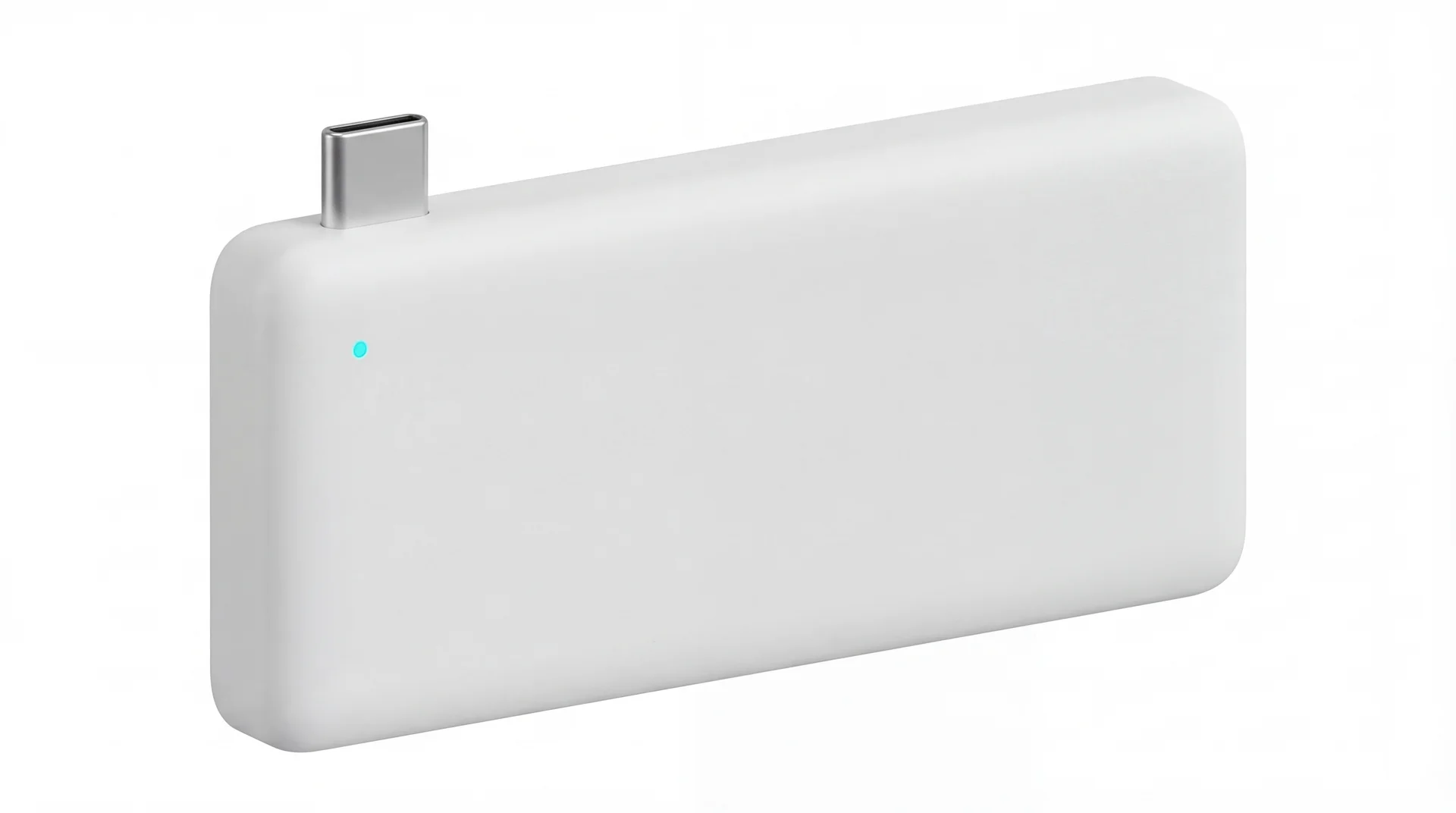
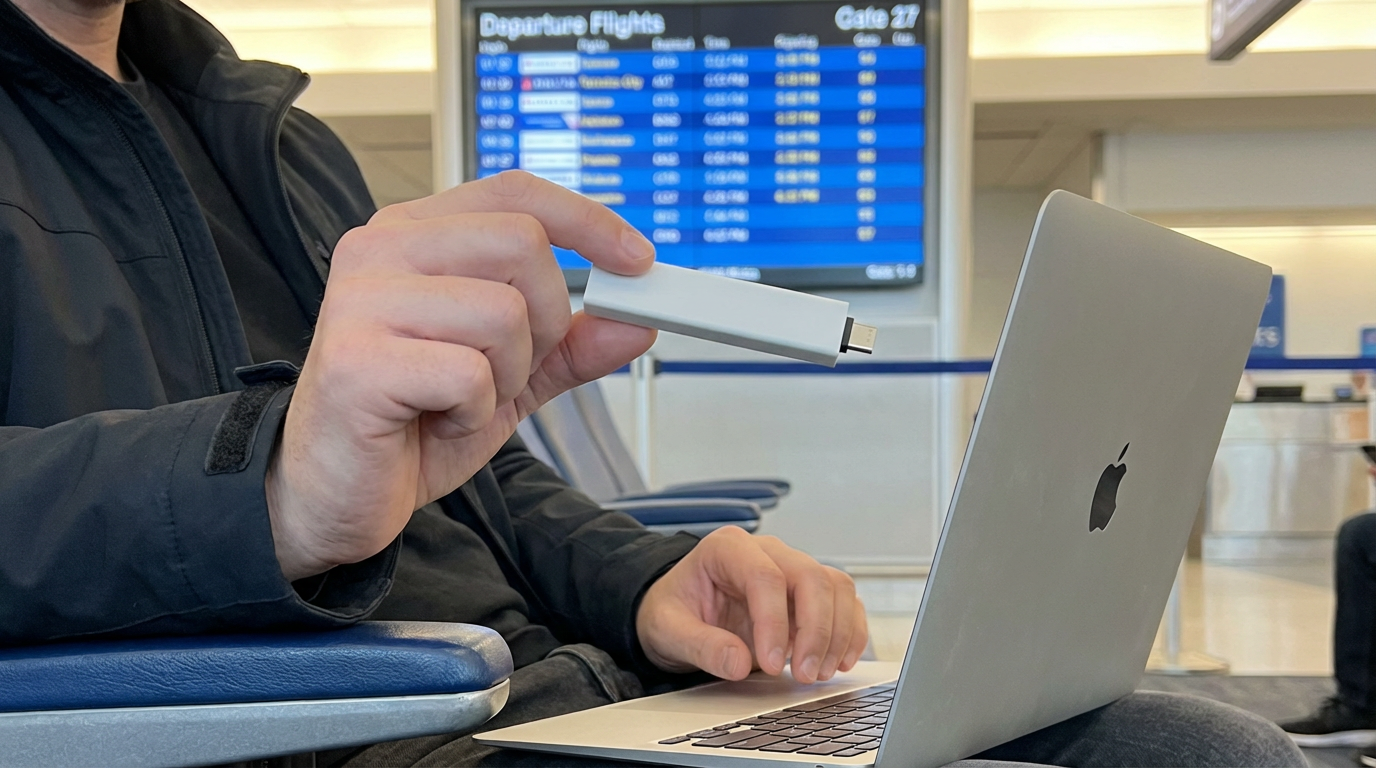
Relay is a hardware startup building a flush USB-C 5G module specifically for MacBook. It plugs into your USB-C port, includes an eSIM with data already loaded, and gives your Mac 5G connectivity in about 3 seconds — with zero drivers required. It's designed to plug directly into your MacBook's USB-C port, so it's not an awkward stick jutting out of the side.
Two models: Relay Air ($125, for MacBook Air and Neo) and Relay Pro ($175, for MacBook Pro). Pre-orders open at relay5g.com, with shipping targeted for Q3 2026.
It won't replace native cellular if Apple ever ships it. But for the current gap — the here-and-now, 2026 MacBook ecosystem — it's a direct answer to the problem described above. See how Relay compares to every alternative →
The bottom line
The MacBook 5G gap isn't a rumor or a complaint — it's a documented, year-after-year design choice by Apple that leaves MacBook users behind every other premium laptop platform. MacBook cellular remains a workaround game: hotspots, MiFi, and dongles that sort of work, not a native solution.
Until Apple ships a MacBook with built-in 5G — which could be years away — users who need reliable connectivity away from WiFi will need to reach for external solutions. The good news: those solutions are finally getting better.